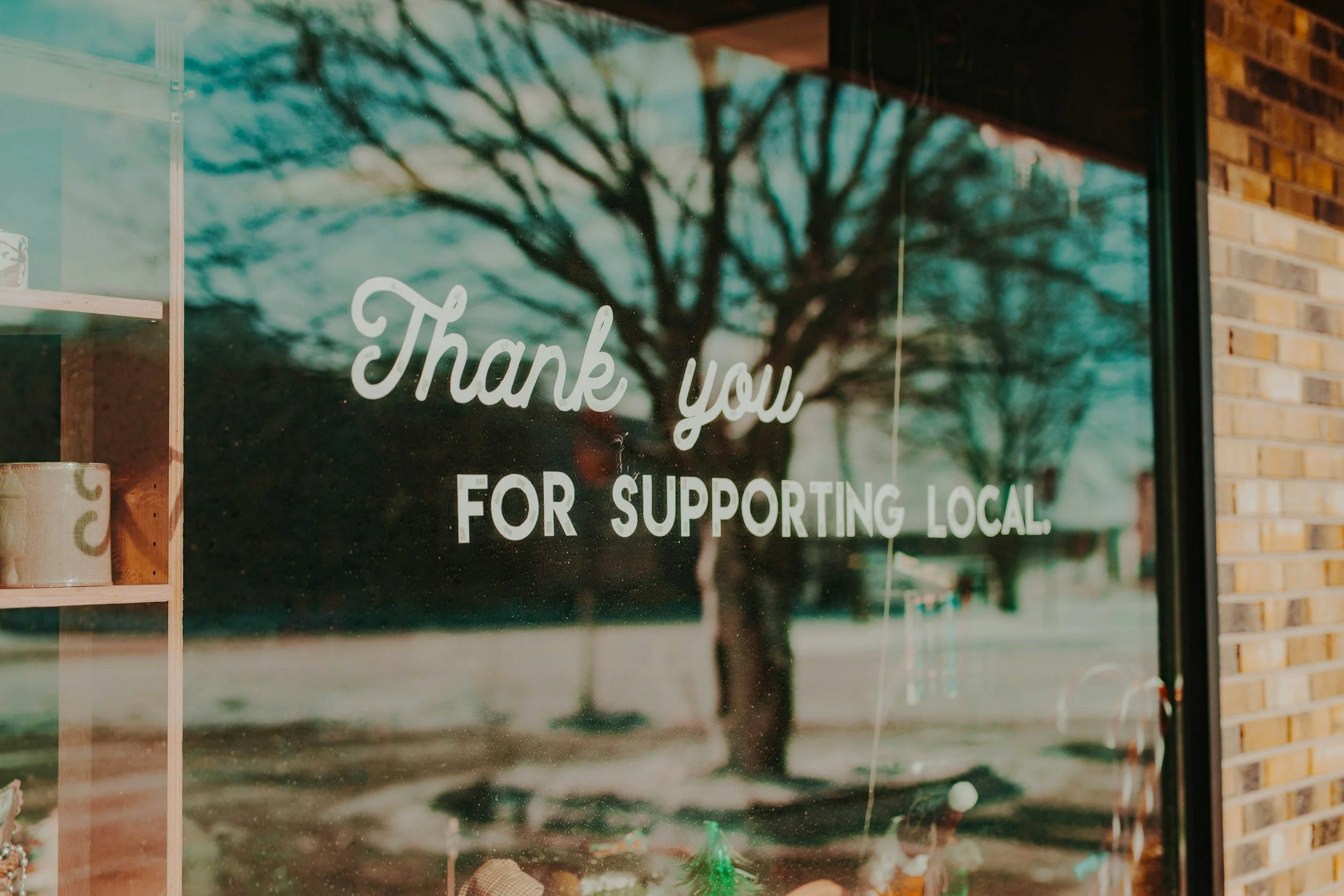
Economic Response
Grow a strong local and national economy with transparency, together.
Kitchener is highly exposed to U.S. trade.
Issue: More than 90% of exports produced in Kitchener go to the United States. Across Kitchener-Cambridge-Waterloo, $17.8 billion, or 46.5% of regional GDP, is generated from exports to the U.S. The City also reports that the region's top 30 export industries account for approximately 81,500 jobs.
My solution: I will work with local businesses, manufacturers and economic-development organizations to strengthen Kitchener's connections to Canadian and international markets while protecting our important U.S. trade relationships. I want Ward 6 businesses to have more than one market to depend on.
Circular economy - turn waste into local economic opportunity.
Issue: Kitchener generates significant amounts of waste, while valuable materials such as construction materials, furniture, electronics, organics and reusable goods can still have economic value. When these materials are discarded instead of repaired, reused, refurbished or recycled, we lose both resources and opportunities for local businesses and jobs. A circular economy can help reduce waste while keeping more economic activity within our community.
My solution: I will support a Kitchener circular-economy strategy that treats waste as a resource rather than simply something to dispose of. I will encourage the City to expand opportunities for repair, reuse, refurbishment, recycling and material recovery; look for ways to incorporate reused and recycled materials into municipal projects; and support local businesses that turn discarded materials into new products. I will also advocate for partnerships with local businesses, nonprofits, colleges and universities to develop practical circular-economy initiatives.My goal is simple: less waste going to landfill, more materials staying in use, and more local jobs and economic activity created right here in Kitchener.
U.S. tariffs can directly affect local jobs.
Issue: The City identifies Kitchener-Cambridge-Waterloo as the fourth-most vulnerable Canadian region to proposed U.S. tariffs, according to a Canadian Chamber of Commerce study. The City has also reactivated its Tariff and Trade Task Force because of the continuing trade uncertainty.
My solution: I will push for regular reporting to Council on the local employment and business impacts of tariffs, so decisions are based on current Kitchener data. I will also advocate to the provincial and federal governments for programs that specifically reach affected Kitchener workers and businesses.
Small businesses need help finding new markets.
Issue: Ontario announced more than $1.1 million for Waterloo Region projects in August 2026 to help diversify export markets and reduce reliance on U.S. trade. Those projects are intended to protect 1,230 local jobs.
My solution: I will make sure Kitchener businesses know about provincial and federal funding that is already available. I will advocate for a simple municipal "one-stop" business support system that connects entrepreneurs with the appropriate government programs instead of leaving small businesses to navigate multiple levels of government on their own.
Kitchener should use its purchasing power to support local businesses.
Issue: Approximately 98% of the City's spending on goods, services and construction already goes to Ontario-based businesses. The City is also examining Canadian alternatives to U.S.-supplied products.
My solution: I will build on that 98% record by making it easier for Kitchener businesses to compete for City contracts. I will support better communication about upcoming procurement opportunities and supplier-readiness programs while respecting competitive procurement rules and applicable trade obligations.
We need stronger Canadian supply chains.
Issue: Trade uncertainty can increase the cost and availability risks of imported materials, equipment and components. Kitchener's economy is connected to continental manufacturing and supply chains, making disruptions important to local companies.
My solution: I will encourage the City to identify Canadian and Ontario alternatives wherever practical, particularly for municipal purchases. I will also support connecting local businesses with Canadian suppliers so that companies have alternatives when U.S. tariffs or supply disruptions increase costs.
Manufacturing remains critical to our economic future.
Issue: Kitchener has a strong manufacturing base and is connected to major North American manufacturing supply chains. The province has identified manufacturing, aerospace, defense and technology as sectors requiring support as trade conditions change.
My solution: I will advocate for economic-development policies that attract advanced manufacturing, automation, robotics, clean technology and other high-value industries to Kitchener. My goal is to help create jobs that are productive, skilled and resilient to changes in international trade.
Kitchener needs to compete aggressively for new investment.
Issue: Ontario's economy remains deeply connected to the United States. In 2025, 71.7% of Ontario's international exports went to the U.S., demonstrating how important that market remains.
My solution: I will support an investment strategy that markets Kitchener's talent, infrastructure, post-secondary institutions, technology sector and strategic location to companies looking to expand in Canada. I want Kitchener to attract companies that create jobs and strengthen our local supply chain.
Infrastructure is economic policy.
Issue: Businesses need reliable transportation, utilities, broadband and access to employment areas to remain competitive. The City notes that Kitchener's economy is strongly connected to continental supply chains and export markets.
My solution: I will look at every major infrastructure decision through an economic-development lens as well as a community lens. That means supporting infrastructure that improves access to jobs, helps businesses move people and products efficiently, and makes Kitchener more attractive for investment.
Workers need skills that match the new economy.
Issue: Ontario announced $12.9 million for Waterloo Region in 2025 through its Skills Development Fund Training Stream, with the stated goal of helping more than 50,000 people prepare for jobs in areas including manufacturing, construction, skilled trades, education and health innovation.
My solution: I will work with universities, colleges, employers and other partners to strengthen pathways into skilled trades, advanced manufacturing, technology and other in-demand occupations such as mental and physical healthcare. As someone who is a graduate student in the mental health practice field and holding strong relationships with persons in the skilled trades and other healthcare systems, I understand the needs. I will focus on connecting residents to existing training opportunities while advocating for programs that respond to the needs of Kitchener employers.
Strong Economies
✳︎
Strong Communities
✳︎
VOTE Amber Louise Culley OCTOBER 26th
✳︎
ADVANCE POLLS October 13th-15th
✳︎
A Vote for Transparency and Trust
✳︎
Strong Economies ✳︎ Strong Communities ✳︎ VOTE Amber Louise Culley OCTOBER 26th ✳︎ ADVANCE POLLS October 13th-15th ✳︎ A Vote for Transparency and Trust ✳︎

We need all people to share in rising prosperity.”
- Christine Lagarde
“I believe a strong local economy isn't about choosing between business and workers. It's about building an economy where businesses can succeed, workers can prosper, and families can build a future.”
- Amber Louise Culley
“A strong economy is one where everyone has the opportunity to participate, contribute and prosper.”
- Amber Louise Culley
“Higher productivity won’t make Canada immune to US trade policy, but it would help buffer the effects of tariffs. And it’s the clearest path to boosting real wages, making life more affordable.” - Carolyn Rogers
“Canada and other advanced economies will need to do more to support prosperity and avoid suffering from chronically slow growth and weak demand in the future.” - Carolyn Wilkins
“There are no shortcuts to a vibrant economy—it must be built from the bottom up, from the empowerment of every single individual.”
- Christine Lagarde